
The Framing Effect & The Halo Effect: How Marbella Wins the Tourist Race in Andalucía
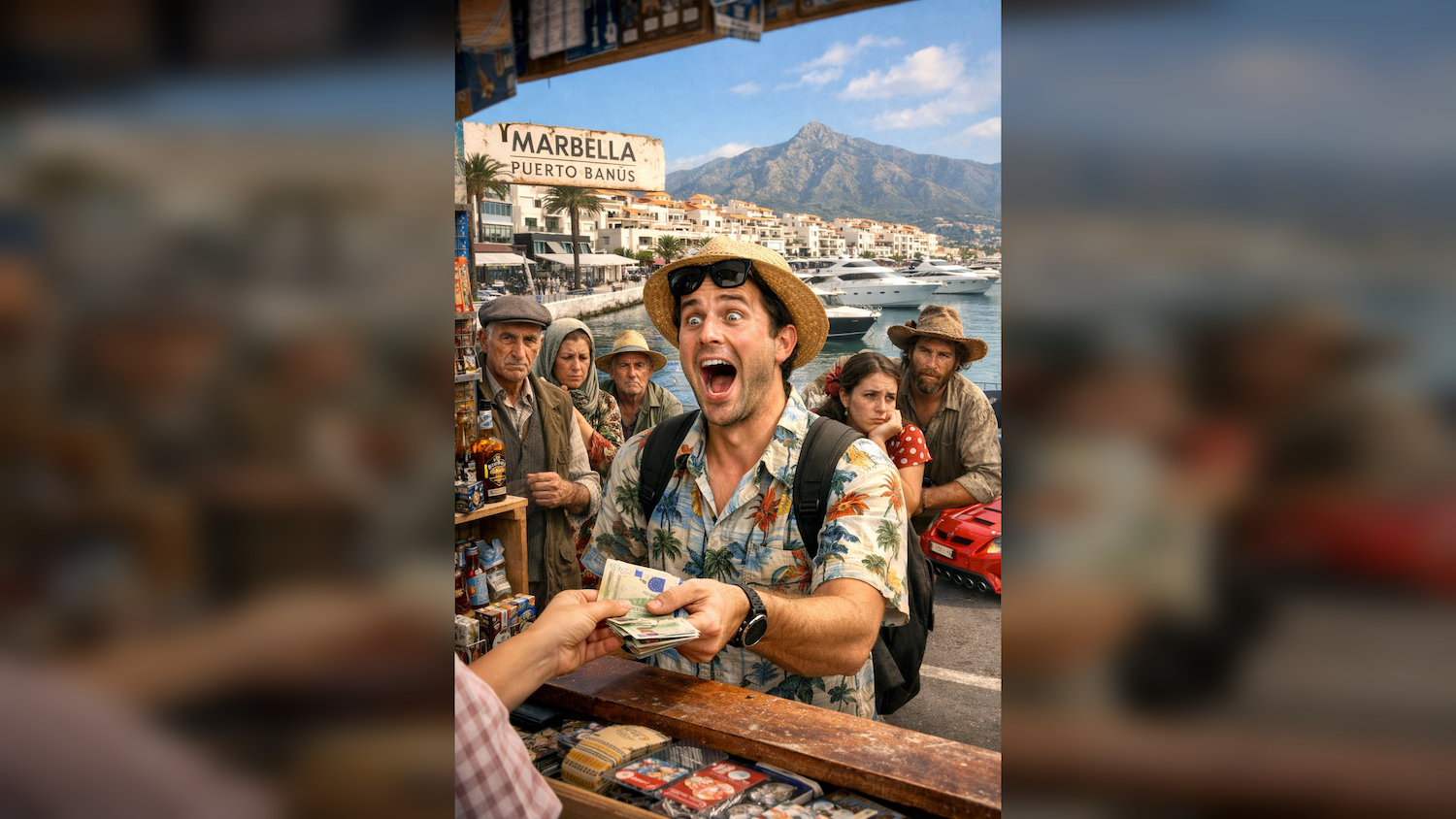
Today I learned about two interesting psychology concepts: the framing effect and the halo effect. I know I should stop reading non fiction books, but I can't get myself away from it.
The framing effect is a cognitive bias where people make decisions based on how options are presented with positive or negative connotations, rather than on the facts themselves.
The halo effect is a cognitive bias where one positive trait of a person or product leads observers to assume that other positive, unrelated traits also exist.
So how do these two relate to Marbella? Because Marbella has a very interesting story.
In the early 1950s, Marbella was just a small fishing village. Nothing else. Until one person bought the Marbella Club Hotel in 1954, aiming to create a private retreat for European nobility, celebrities, and high society. They saw the opportunity and framed the entire town around it. That single decision shaped everything that followed.
Now look at today's Marbella: compared with Dubai or other luxury destinations, famous people constantly visiting. We get the luxury part. But how did it reach the point of becoming such a popular place?
One name above all: Prince Alfonso von Hohenlohe. He's the one who bought the Marbella Club Hotel, invited his aristocratic friends, hosted a wedding that the European elite attended, and created an experience worth talking about.
Now fast forward to today and look at what happens.
The Framing Effect
A tourist in a cold country sees advertising and videos of Marbella online. The town is marketed as beautiful, 300 days of sun (probably more than that, honestly). They see palm trees, gorgeous beaches, those nice chiringuitos on the sand, and they start imagining themselves there.
So for once, the tourist decides to skip their classic holidays in the south of their own country and flies to Málaga — because they want to visit Marbella.
The framing effect kicks in the moment they land. The sun hits their brain, serotonin gets released, and suddenly they're happy. They pick up the cheap rental car they booked online and drive to Marbella.
They don't need to see the town. They don't need to focus on the beauty. Marbella is already beautiful to them, and because of that, they fall in love before they've really looked. They go to Puerto Banús, see the yachts, the famous faces, the Dolce & Gabbana café, and then they make those viral videos showing the marina (it's very small and it's always the same street if you look closely) saying "should I live here?"
This is the framing effect. And now I see how Apple uses the same trick every time they present a new iPhone that is basically the same as the last one. Just another one.
This is also very similar to something I've personally experienced as someone who moved from one country to another. It's called the honeymoon phase, where everything in the new country feels beautiful and better compared to what you left behind.
The Halo Effect
Now that the tourist is head over heels, they walk into a bar and order a coffee for €5. They think it's nice. It's not. Do the sugar test and see for yourself.
Or they have a cappuccino for €8. Okay, the cappuccino is fine, I can confirm that. But for the love of God, in Calabria you get a whole pizza for that.
Then they have Carbonara for €40, or some nice sushi for €80–90. For my Roman friends, yes they make Carbonara with guanciale and no cream.
They love everything. They go on Google Maps and rate it all 5 stars.
But here's the psychological trick: it doesn't matter whether the food is actually good or not. The halo effect means they love the food regardless — because they already love the place.
The Result
These two effects combined made Marbella what it is today — a luxury destination that competes with Dubai, Miami, and the rest.
But if you expand the view a little and travel around Andalucía, you discover that yes, Marbella is beautiful and it truly lives up to expectations. Seriously, come visit, you won't be disappointed. But in Andalucía, Marbella is just "one of the many." Granada, Sevilla, Ronda, Nerja, Cádiz. White villages. Stunning nature.
Marbella is just one of them. Because Andalucía is incredibly beautiful and full of towns and villages that rival Marbella. But Marbella found the right positioning, and used these two psychological effects, whether they knew it or not.
Ask any Andalusian who doesn't live in Marbella and they'll tell you: it's just a town.
So in the end, Marbella can be compared to Sofía Vergara. Beautiful, elegant, impossible to ignore.
But put Sofía in Colombia, and she becomes just "one of the many."
How you present yourself makes the difference. Marbella rose from one single event and two psychological effects.